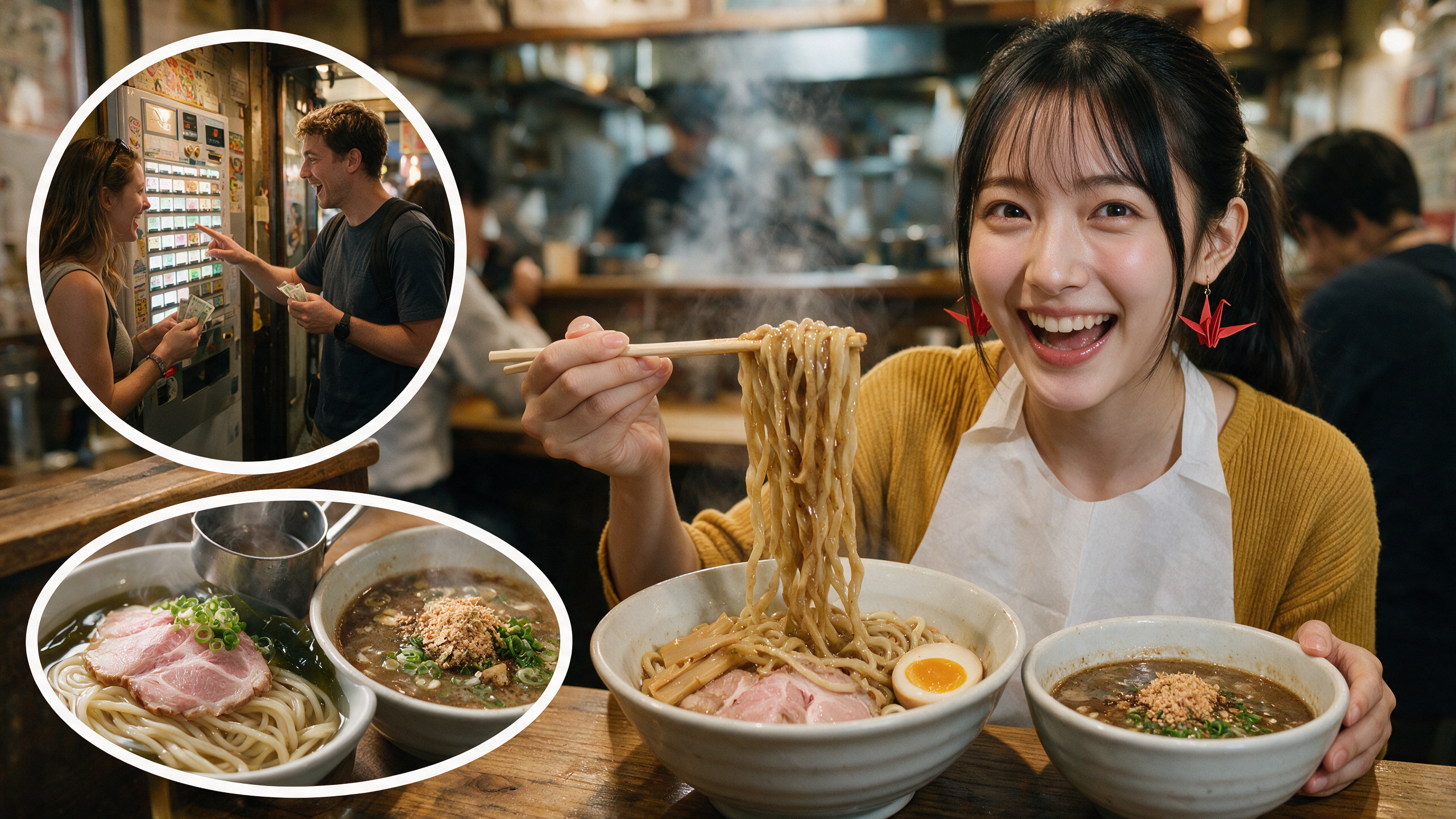
Tokyo’s tsukemen culture elevated standard ramen by decoupling bouncy wheat noodles from concentrated, steaming dipping broths. Expect to pay between ¥900 and ¥1,500 per bowl, usually ordering through physical push-button ticket machines right inside narrow entryway corridors. Most counters seat fewer than fifteen diners at once, meaning weekday lunch hours demand patience as queues snake outside onto sidewalks. The intensity of animal-fat and dried seafood broths can feel heavy halfway through, which is precisely why shops offer hot dashi pots to dilute your remaining soup into a drinkable broth.
Neighborhood Tsukemen Counters with 5 AM Ramen
Inside neighborhood noodle joints across Tokyo, cooks rinse freshly boiled wheat noodles in ice-cold water to lock in an elastic chew before serving them alongside boiling pork and fish stock. Payment happens exclusively at push-button ticket vending machines near the entrance, where cash is king and credit cards are rarely accepted. As food writer 5 AM Ramen illustrates, the dramatic temperature difference between chilled, springy noodles and scalding broth forms the core of authentic dipping ramen. Expect tight counter seating shoulder-to-shoulder with local office workers, with average turnarounds lasting under twenty minutes.
🎯 Push the button labeled ‘Tsukemen’ (つけ麺) on the cash-only machine and hand your paper ticket directly to the chef as you sit.
- 📍 Featured Spot: Tokyo Traditional Tsukemen Counters
- 💡 Best for: Noodle Enthusiasts, Solo Diners
Unorthodox Tsukemen Bowls via Brandon Nguyen
Specialty noodle shops throughout the city continuously expand beyond classic tonkotsu-gyokai bases by introducing spicy chili oils and unorthodox vegetable purées. Ordering requires cash or IC cards at touchscreen kiosks near the door, leading into compact ground-floor spaces with fewer than ten stools. Following Brandon Nguyen’s dining recommendations points adventurous eaters toward broth recipes that cling heavily to cold, extra-thick wheat strands. Plan to arrive fifteen minutes before the 11:30 AM lunch rush to avoid standing in sidewalk queues that form quickly during peak hours.
🎯 Target specialized shops during early afternoon lull hours to explore innovative broths without peak-hour line pressures.
- 📍 Featured Spot: Specialty Tsukemen Shops
- 💡 Best for: Adventurous Eaters, Culinary Explorers
Mastering Soup-Wari Etiquette with Isabel Lim
Concentrated dipping broth retains a thick, gravy-like viscosity designed specifically for coating cold, springy noodles rather than drinking outright. Most traditional counter establishments operate on a walk-in basis with cash ticket machines placed right by the sliding front door. After finishing your noodles, Isabel Lim advises asking the counter chef for ‘soup-wari’ to receive a splash of hot dashi that thins the heavy base into a warm broth. This simple request allows you to enjoy every drop of umami without feeling overwhelmed by concentrated sodium.
🎯 Leave a small pool of concentrated broth in your bowl before handing it over to the chef with a polite ‘soup-wari onegai shimasu’.
- 📍 Featured Spot: Classic Tsukemen Counter Experience
- 💡 Best for: First-Time Visitors, Foodies
Vegepota Tsukemen Enji in Ikebukuro
Vegepota Tsukemen Enji in Ikebukuro stands out for its thick dipping base thickened with pureed potato and seasonal root vegetables mixed into rich pork bone broth. Cash-only ticket machines sit immediately at the ground-floor door, where you select either standard wheat noodles or nutrient-dense wheat-germ noodles. As Daniel Eats World demonstrates during his visit, the vegetable starch gives the steaming soup a velvety texture that binds seamlessly to coarse noodles without feeling excessively greasy. English menu translations are taped beside the ticket buttons, making selection straightforward for non-Japanese speakers. Counter seating fits roughly twelve guests, with average lunch queues running around twenty minutes.
🎯 Opt for the earthy wheat-germ noodles (胚芽麺) on the ticket machine for superior texture and a nutty flavor that cuts through the thick broth.
- 📍 Featured Spot: Vegepota Tsukemen Enji
- 💡 Best for: Comfort Food Seekers, Noodle Lovers
🍴 Tabelog Reality Check (Local Japanese Food Benchmark)
- Tabelog Score: 3.75 / 5.0 ★ Top 3% in Japan
- Reservations: Walk-in only
- Crowd / Wait Time: 15-30 min wait during peak hours
Menya Itto in Shin-Koiwa
Located a short walk from Shin-Koiwa Station, Menya Itto consistently ranks among Tokyo’s highest-rated ramen shops due to its meticulous poultry and seafood broths. Slices of tender, sous-vide cooked chicken breast and pork chashu sit atop extra-thick noodles alongside pork meatballs studded with crunchy nankotsu cartilage. Insight from Nama Japan confirms that the full-topping chashumen costs roughly ¥1,100, delivering exceptional culinary value for top-tier quality. Travelers collect timed entry tickets or queue in structured line formations outside the storefront before entering. Payment is handled in cash at the entry machine before taking a seat along the wooden counter.
🎯 Plan for a 45-minute train ride out to Shin-Koiwa and arrive before 10:30 AM to secure a lunchtime slot without extended waiting.
- 📍 Featured Spot: Menya Itto
- 💡 Best for: Ramen Purists, Destination Diners
🍴 Tabelog Reality Check (Local Japanese Food Benchmark)
- Tabelog Score: 3.92 / 5.0 ★ Top 3% in Japan
- Reservations: Timed ticket distribution / walk-in
- Crowd / Wait Time: 30-60 min wait typical
Kelp Water Tsukemen at Menya Suzuharu in Hongo
Glistening cold noodles arrive floating in a bowl of viscous konbu-sui (kelp water) at Menya Suzuharu in Bunkyo Ward. A ticket machine at the entrance accepts cash for the signature soy sauce tsukemen topped with Nagoya Cochin chicken oil for ¥1,200. Following the presentation shown by JAPANESE FOOD, diners dip the hydrated strands into the hot, savory broth before pouring leftover kelp liquid directly into the bowl to finish. Ground-floor counter seating remains open from 11:00 AM to 3:00 PM and 6:00 PM to 8:30 PM, staying closed on Sundays.
🎯 Keep your cash ready for the ¥450 special topping add-on to sample rare, perfectly cooked chashu slices alongside your kelp-infused noodles.
- 📍 Featured Spot: Menya Suzuharu
- 💡 Best for: Gourmet Travelers, Aesthetic Foodies
🍴 Tabelog Reality Check (Local Japanese Food Benchmark)
- Tabelog Score: 3.78 / 5.0 ★ Top 3% in Japan
- Reservations: Walk-in only
- Crowd / Wait Time: 15-30 min wait during lunch
Rokurinsha at Tokyo Station Ramen Street
Deep inside the underground B1 passage of Tokyo Station, Rokurinsha draws continuous crowds for its intensely rich tonkotsu-gyokai dipping broth. Order placement occurs at the automated touch-screen ticket machine outside the queue line, which accepts both cash and IC transit cards like Suica. LeslieAnnLa notes that while long queues wrap around the glass corridor throughout the day, the fast-moving counter system keeps waiting times around 30 minutes. Cold, thick noodles carry the heavy, gravy-like seafood broth efficiently, offering a deeply comforting meal right before catching a Shinkansen train.
🎯 Beat the heaviest rush by arriving between 7:30 AM and 9:30 AM for their specialized morning tsukemen menu.
- 📍 Featured Spot: Rokurinsha
- 💡 Best for: Transit Travelers, Hungry Commuters
🍴 Tabelog Reality Check (Local Japanese Food Benchmark)
- Tabelog Score: 3.76 / 5.0 ★ Top 3% in Japan
- Reservations: Walk-in only
- Crowd / Wait Time: 20-45 min wait
Fuunji in Shinjuku with Your Japan Guide
Fuunji in Shinjuku operates from a cozy basement room where hungry diners stand in a neat line directly behind seated counter guests. Purchasing your meal ticket at the door requires cash, with the signature tsukemen featuring a mountain of fish powder floating atop boiling chicken-seafood broth. Recommendations from Your Japan Guide emphasize using the counter-side condiments and requesting hot soup-wari to dilute the remaining sauce when finished. The fast-paced kitchen team clears seats rapidly, keeping wait times under thirty minutes even when the queue extends up the sidewalk stairs. Non-Japanese visitors can point easily at ticket buttons labeled with English subtext.
🎯 Budget ¥1,000 to ¥1,200 in physical cash and prepare to line up along the interior basement wall while waiting for counter space to open up.
- 📍 Featured Spot: Fuunji
- 💡 Best for: Solo Travelers, Fast Diners
⏱️ Other Spots Featured in this Video:
- 01:15 – Fuunji Highlight
🍴 Tabelog Reality Check (Local Japanese Food Benchmark)
- Tabelog Score: 3.77 / 5.0 ★ Top 3% in Japan
- Reservations: Walk-in only
- Crowd / Wait Time: 20-40 min wait during peak hours
Chuka Soba Tomita in Matsudo with Mikey Chen
Head northeast to Matsudo Station to experience Chuka Soba Tomita, widely regarded as a pinnacle destination for ultra-dense dipping noodles. A ticket system requires arriving as early as 7:00 AM to secure a numbered time slot for later in the day, after which you return at your assigned hour. As Mikey Chen of Strictly Dumpling explains, freshly milled local wheat yields firm, greyish noodles that pair with a dark pork-and-seafood soup simmered over twenty hours. Cash is mandatory when paying at the counter machine, with bowls priced around ¥1,200 to ¥1,800 depending on chashu add-ons. The deep, smoky umami of the broth completely coats every noodle strand, delivering an unforgettable dining experience.
🎯 Secure your timed ticket early in the morning, then explore nearby Matsudo neighborhood shops until your assigned seat time.
- 📍 Featured Spot: Chuka Soba Tomita
- 💡 Best for: Hardcore Foodies, Culinary Pilgrims
⏱️ Other Spots Featured in this Video:
- 08:45 – Chuka Soba Tomita
🍴 Tabelog Reality Check (Local Japanese Food Benchmark)
- Tabelog Score: 3.98 / 5.0 ★ Top 3% in Japan
- Reservations: Timed ticket distribution from 7:00 AM
- Crowd / Wait Time: Return at assigned time ticket slot
Menya Musashi’s Braised Pork Tsukemen
Menya Musashi maintains several spacious branches across Tokyo, serving robust tsukemen topped with thick, melt-in-your-mouth chunks of braised pork belly. Ordering takes place at touchscreen ticket terminals near the entrance that accept cash and IC cards while offering clear English language toggles. Food writer Julian Mu notes that diners can select larger noodle portions (oomori or tokumori) at no extra charge, making it ideal for big appetites. Counter seating is widely spaced compared to typical noodle joints, drastically reducing wait times to under fifteen minutes during peak hours. The rich pork-and-seafood stock delivers a deeply satisfying balance of sweet tare and savory depth.
🎯 Take full advantage of the free noodle portion upgrade at the ticket terminal if you have a hearty appetite after a day of sightseeing.
- 📍 Featured Spot: Menya Musashi
- 💡 Best for: Big Eaters, Casual Diners
🍴 Tabelog Reality Check (Local Japanese Food Benchmark)
- Tabelog Score: 3.55 / 5.0 ★ Top 3% in Japan
- Reservations: Walk-in only
- Crowd / Wait Time: 10-20 min wait